From AI Creator to Paid Filmmaker
Cohort 11, Session 11 — taught by Qiushi (Q) Zhang, founder of Leyline.
To make a film with AI, you can follow a production workflow for vertical micro-dramas. This process starts with a script, which is then broken down for AI keyframe generation. These keyframes guide AI video models to render the final scenes. The finished episodes can then be monetized through brand commissions, ad-revenue sharing, or direct-to-consumer distribution on various platforms.
What you will learn
- Understand the narrative structure and requirements of the vertical micro-drama format.
- Learn a step-by-step AI production workflow, from automated script breakdown to final editing.
- Identify multiple monetization paths for AI-generated content, including brand commissions, ad revenue, and pay-per-episode models.
- Discover how to use social media as a free 'litmus test' to validate a show concept before full production.
- Learn the correct way to pitch an AI-generated series to distributors, emphasizing finished episodes over traditional pitch decks.
AI Micro-Drama Production Workflow
This workflow details the complete production pipeline for a vertical micro-drama, from breaking down your script for AI tools to generating keyframes and rendering the final video.
Step 1. Perform a script breakdown using AI to generate a shot list.
This replaces the manual work of a line producer and is the first step in budgeting your production.
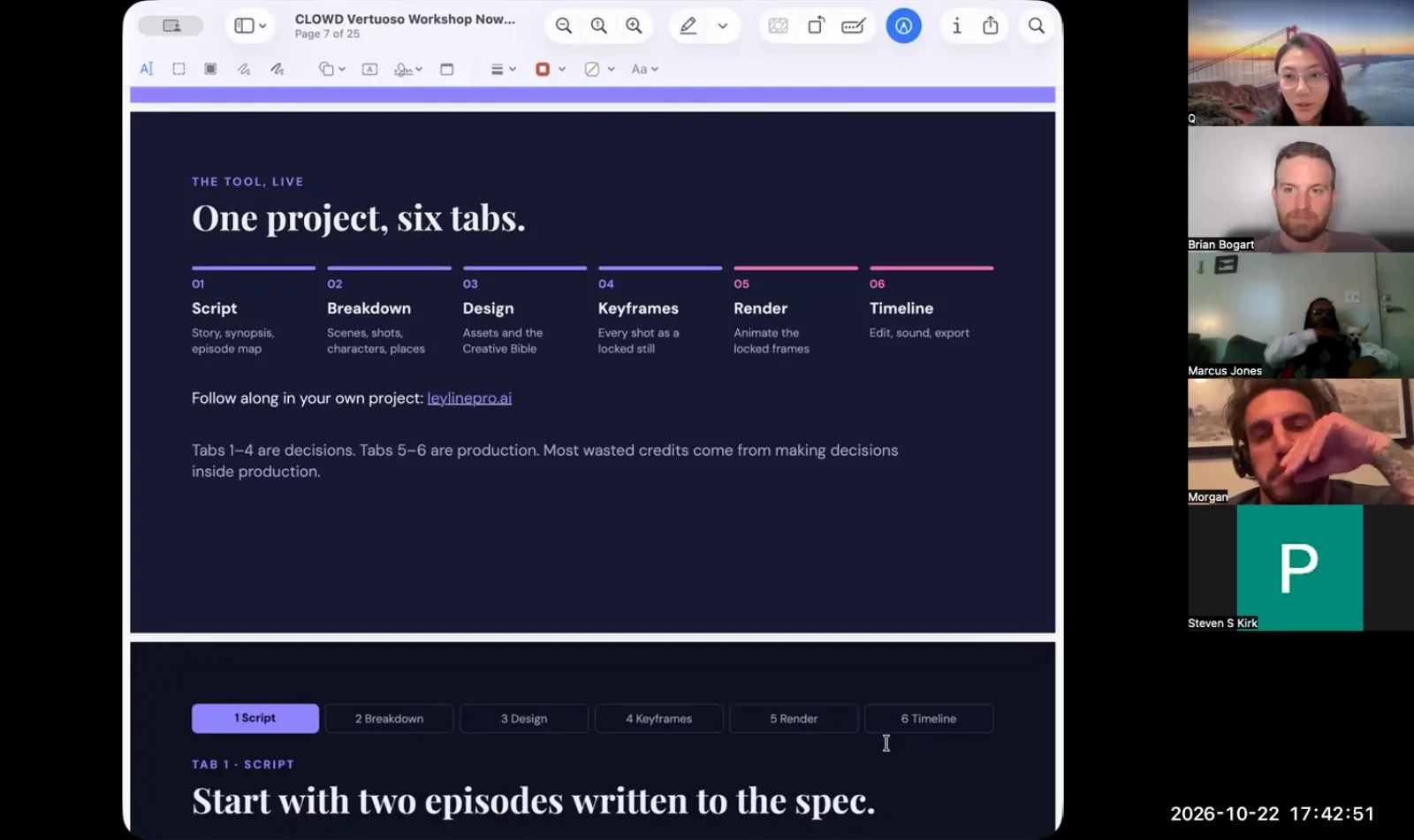
The AI filmmaking tool's interface outlines the six main production tabs, including the 'Breakdown' step for scenes and shots.
Step 2. Design your characters and establish a consistent visual style.
Locking in your designs early prevents costly inconsistencies during keyframe generation and rendering.
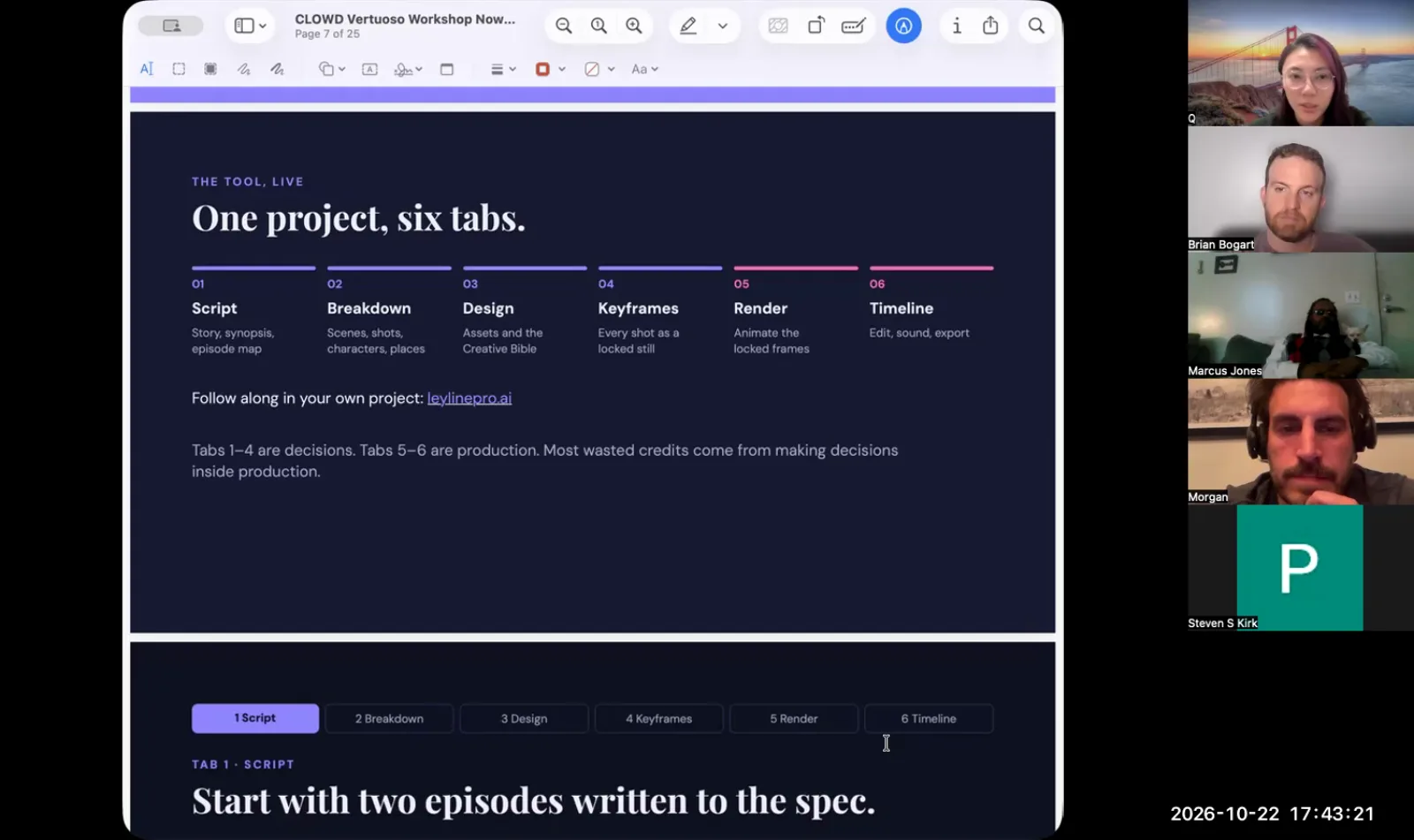
The AI filmmaking workflow is organized into six tabs, with the third tab, 'Design,' used for creating assets and a creative bible.
Step 3. Generate keyframes for each shot until you are happy with the composition and style.
The more time you spend perfecting this step, the less time and money you will spend on the final video rendering.
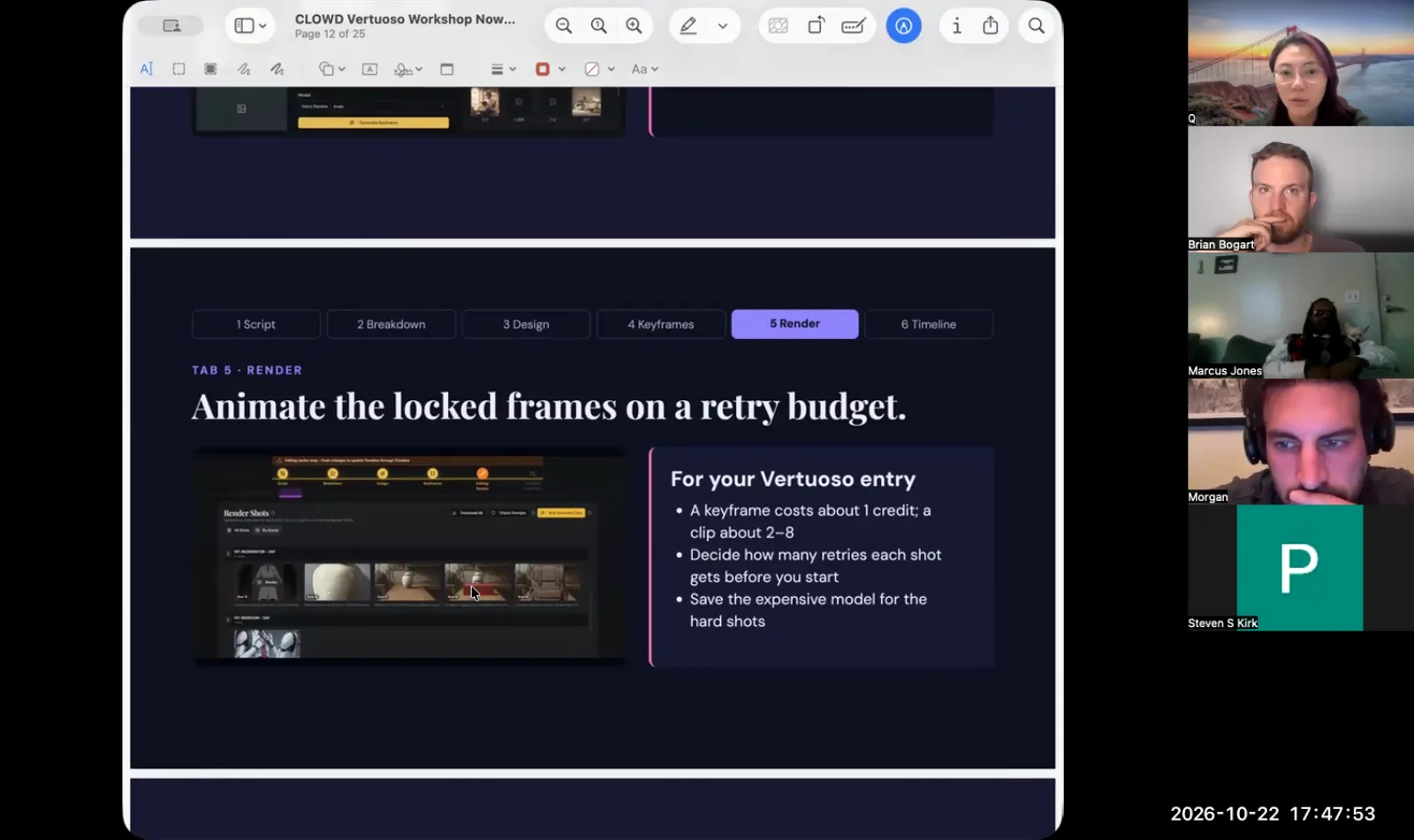
The presentation explains how to manage a render budget by considering the cost of keyframes and retries.
Step 4. Render the final video from your locked keyframes.
This is the most compute-intensive part, so ensure your keyframes are approved to avoid re-rendering.
Step 5. Export the rendered video clips and perform the final edit in an external software like CapCut.
Add sound design, music, titles, and pacing in a dedicated video editor to complete the episode.
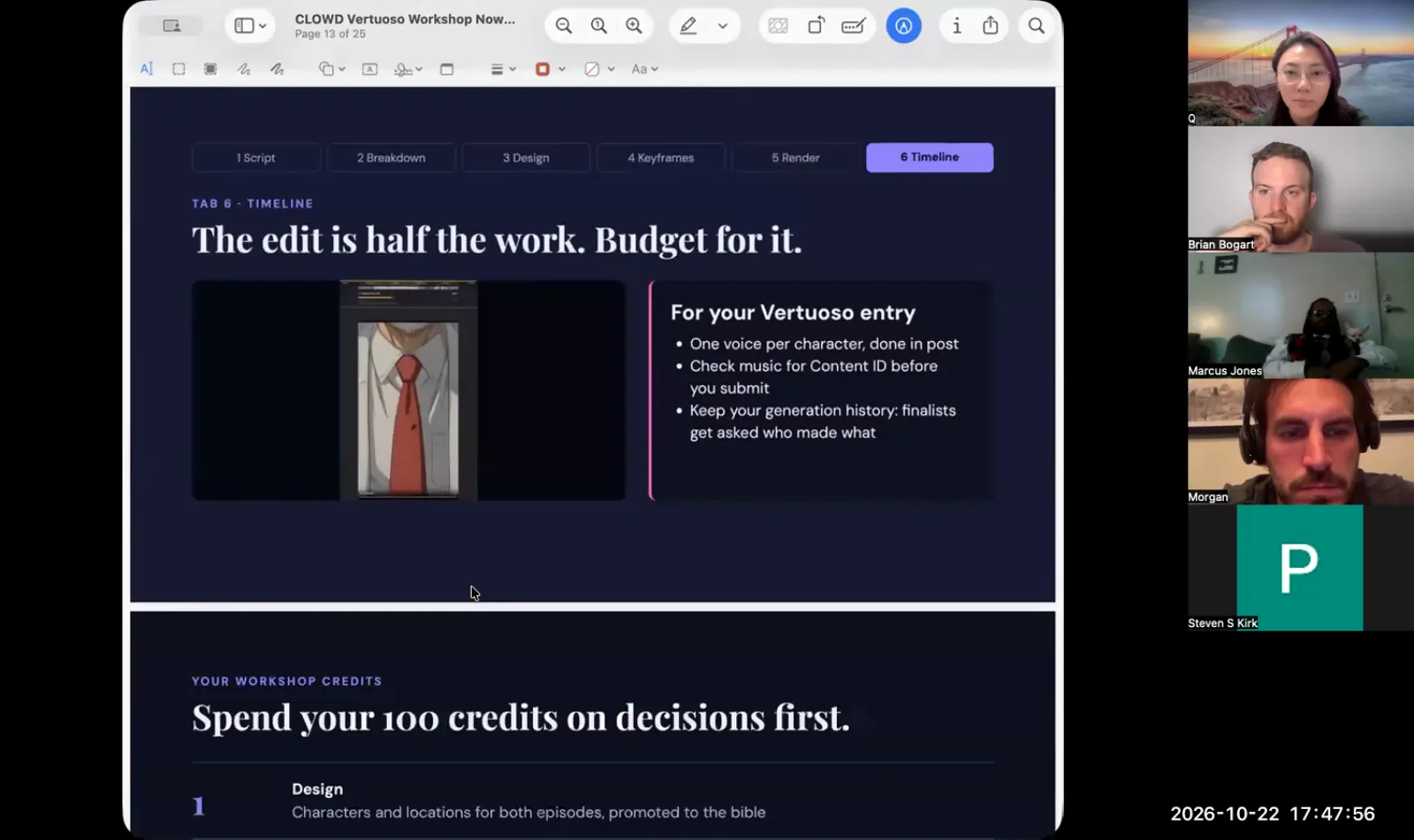
A presentation slide highlights key considerations for the post-production and editing phase.
Monetizing Your AI Micro-Drama
Once your series is complete, this workflow outlines practical strategies for generating revenue, covering brand commissions, ad-sharing models, and direct-to-consumer sales.
Step 1. Create a pilot or the first few episodes of your show to a finished state.
Unlike traditional film, AI show buyers expect to see a finished product, not a pitch.
Step 2. Pursue brand commissions by pitching your services to businesses, non-profits, or individuals (like authors) who want their own show.
This can be a direct way to get paid for production, with rates from $100 to $1,500 per minute.
Step 3. Distribute your show on platforms like TikTok to earn ad-share revenue.
This model pays you based on the viewership your content generates.
Step 4. Submit your finished series to micro-drama apps like Drama Box or ReelShorts to pursue pay-per-episode deals.
These platforms act as distributors and can offer production financing if they select your show.
Step 5. Enter competitions to gain visibility, win prizes, and get discovered by distributors and funders.
Competitions are a key way to get your work in front of industry buyers.
Validating a Show Concept with Social Media
Before committing to a full season, use this workflow to test your show's concept with a real audience, gather free feedback, and confirm interest in your idea.
Step 1. Produce one or two complete episodes of your micro-drama concept.
Step 2. Post the episodes on social media platforms like TikTok and Instagram.
Use relevant hashtags to reach your target audience.
Step 3. Analyze the audience engagement, specifically looking for views, likes, and comments.
Comments like 'next!' or 'part 2?' are a strong positive signal.
Step 4. If engagement is low, pivot to a new concept and repeat the process.
Don't be afraid to abandon ideas that don't resonate with the audience.
Step 5. If engagement is high, use this 'litmus test' as confirmation to proceed with producing the full series.
Key terms
Micro-drama. A short-form, episodic series designed for vertical viewing on social platforms, characterized by rapid story turns and cliffhanger endings to maximize viewer retention.
Vertical Format. A storytelling medium designed for mobile phones where the video is taller than it is wide. It emphasizes fast-paced story turns and strong sound design, as viewers may be listening more than watching.
Hook / Cliffhanger. A narrative device required in the vertical format, placed at the end of an episode to leave the audience in suspense and make them want to watch the next one.
AI Script Breakdown. Using AI to automatically analyze a script and generate a shot list, replacing the traditional, manual work of a line producer and significantly reducing pre-production costs.
Keyframe Generation. A crucial step in the AI production pipeline where you create the primary visual frames or 'shots' for your story based on the script and character designs. Spending more time to perfect keyframes reduces costs in the later rendering stage.
Rendering (AI Video). The computational process of using an AI model to generate the final, animated video sequences from the approved keyframes.
Ad Share Revenue. A monetization model where creators earn a percentage of the advertising revenue generated from views of their content on platforms like TikTok.
Pay-per-episode. A direct-to-consumer monetization model where viewers pay a small fee to unlock and watch each new episode of a series on a dedicated platform.
Brand-Commissioned Micro-drama. A micro-drama series funded entirely by a brand to promote a product, service, or message, effectively acting as a form of narrative advertising.
D2C (Direct-to-Consumer) for Creators. A model where creators bypass traditional industry gatekeepers like studios and distributors to release their work directly to their audience, enabled by modern platforms and AI tools.
Show Bible. A comprehensive document that defines all the core elements of a show, including character designs, style sheets, props, and scripts, to ensure consistency across production, especially when collaborating.
Public Voting. A competition format where the winner is chosen by the general audience rather than a panel of judges, reflecting the social, consumer-facing nature of the micro-drama medium.
Creator Cohorts. Structured, small-group programs where creators learn a new craft and develop their projects together, fostering community, peer review, and collaboration.
All-inclusive pricing. A freelance pricing model for AI production where the quoted rate (e.g., per minute) includes all associated costs, such as compute credits, rather than billing them as a separate line item.
Litmus Test (for content). The practice of posting one or two initial episodes on social media to gauge audience reaction (views, likes, comments asking for 'next') before committing to producing a full series.
Studio of One. A term for the modern AI creator who, thanks to AI tools, can handle all aspects of production—writing, visuals, editing, sound—by themselves.
Gen Jam. A competition, similar to a 'game jam,' for generative AI creators, focused on producing a specific type of content (like a micro-drama) within a set of rules and a deadline.
Podcastification of Content. A trend where visual media is created with the awareness that audiences may be listening more than watching (e.g., on a second screen), leading to more expository dialogue to ensure the plot is understood without full visual attention.
Common mistakes to avoid
- Pitching an AI show with only a trailer or pitch deck; distributors now expect to see several finished episodes because production is cheap and fast.
- Creating content that is 'too indie' and ignoring distributor feedback on what mainstream vertical audiences want to watch.
- Applying traditional filmmaking craft directly to the vertical format without adapting for short attention spans and audio-first consumption patterns.
- Accepting a fixed-price project without ensuring the client's quality demands (e.g., using expensive models) won't make credit costs exceed the payment.
- Working in isolation as a 'studio of one' without seeking feedback from a community or collaborators, which can limit a project's potential.
- Not using social media to test a show idea and get free audience feedback before investing heavily in producing a full season.
Frequently asked questions
How do I make money with AI filmmaking?
You can monetize AI filmmaking through several methods, including securing brand commissions for custom micro-dramas, participating in ad-revenue sharing programs on distribution platforms, or selling episodes directly to your audience using a pay-per-episode model. These strategies provide a practical roadmap for building a sustainable creator business.
What is a micro-drama and how do I make one?
A micro-drama is a short-form series created for vertical viewing. To make one with AI, you start with a script, break it down into scenes, generate keyframe images for each shot using AI tools, and then use those keyframes to render the final video clips for editing.
How to pitch an AI show to distributors?
When pitching an AI show, avoid presenting only a trailer or pitch deck. Because AI production is fast and inexpensive, distributors now expect to see several finished episodes. This demonstrates your ability to execute the concept and proves the show's viability beyond just an initial idea.
How can I test my web series idea before producing it?
Use social media as a litmus test to validate your web series idea before investing in a full season. By sharing initial concepts or short clips, you can gather free audience feedback and gauge interest, confirming if your show has an audience before committing significant time and money.
What are the most common mistakes in AI filmmaking?
Common mistakes include working in isolation without community feedback and failing to test ideas on social media before production. Others miscalculate project costs for client work, where AI credit expenses can exceed a fixed payment, or apply traditional filmmaking techniques that don't work for the vertical format.
From the session
“AI first freed the people who never had this permission before. You make a film without a studio, a budget, or a crew signing off.”
— Q
“In this format, it is 80% storytelling and 20% technique, I would say.”
— Q
“Medium is the message. So right now with the new medium, people's attention span really only is seven seconds. Like people have the memory of a fish.”
— Q
This tutorial was produced from the Leyline Masterclass recording (Cohort 11, Session 11, 2026-10-22). Screenshots are captured directly from the session.