AI filmmaking software refers to a broad category of tools that use artificial intelligence to assist in or generate elements of film production. These tools are applied across the entire filmmaking pipeline, from pre-production tasks like script analysis and scheduling to generating video in production and enhancing visuals in post-production. The central dynamic within this software landscape is the tension between automated, agent-driven creation and granular, artist-driven control, with different platforms adopting distinct philosophies to serve creators.
What Are the Main Challenges with AI Filmmaking Software?
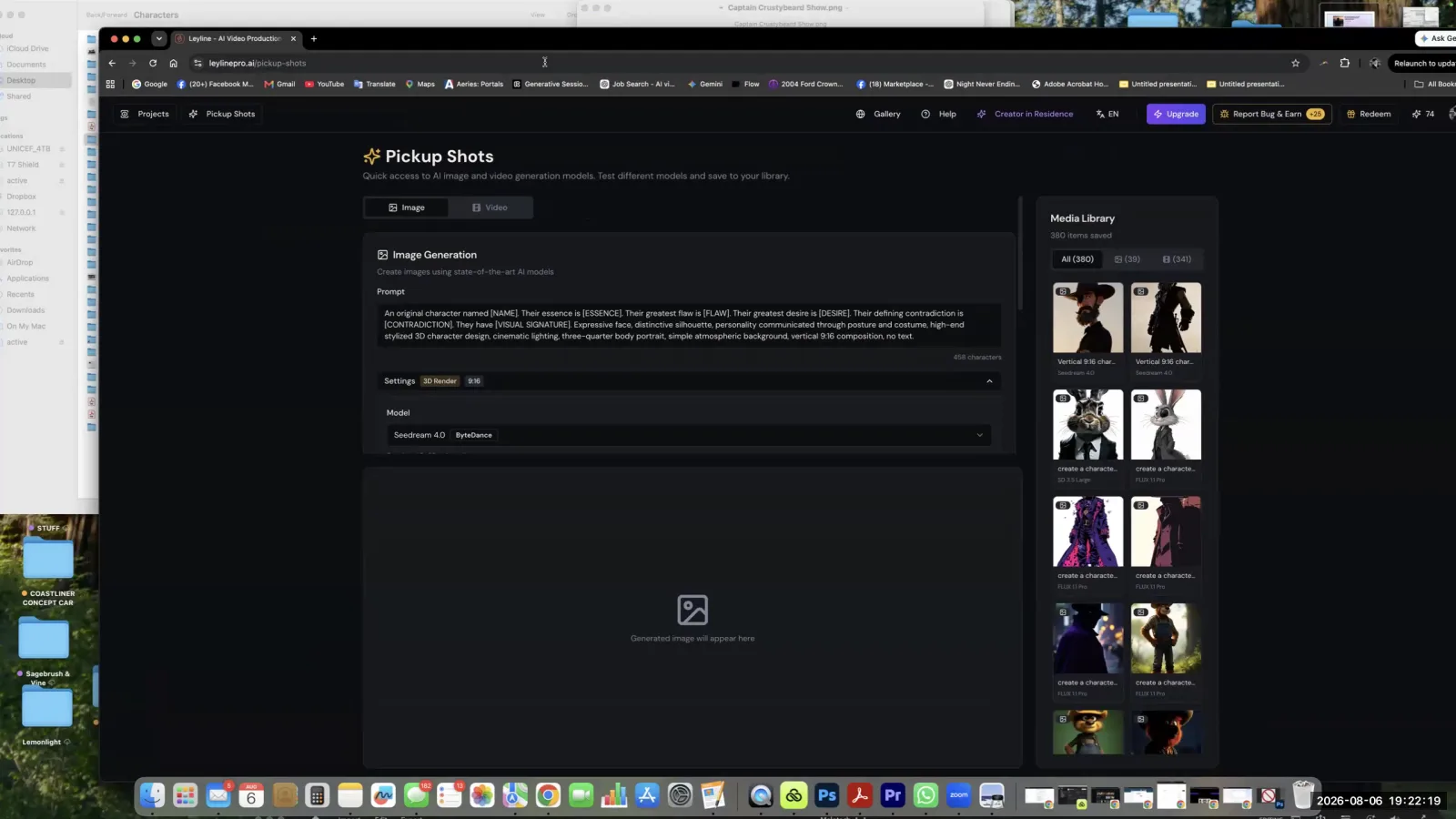
The main challenges with current AI filmmaking software are achieving creative intentionality and managing unpredictable "drift" in generations. Many tools are designed as simple agents that "make the movie for you," which limits a director's control. Meanwhile, generative models often require numerous attempts to produce a specific desired shot, demanding significant manual effort and iteration.
Sandy, a participant in the session, described fighting drift while making her cartoon: "I really had to battle a lot of drift in the AI." Some clips took as many as 10 attempts or a new keyframe. Another participant, film professor David, raised a different concern: being intentional when tools invite users to "just tell me the movie and I'll make it for you." Both examples show why a filmmaker needs control over individual production choices.
How Does Modern AI Software Give Filmmakers More Control?
Modern AI filmmaking software gives filmmakers more control by building in manual overrides at every stage of the process. Instead of a single prompt-to-video workflow, these tools are designed as multi-step platforms that allow users to manually fix AI-generated assets, load their own content, and make granular adjustments throughout production.
Responding to David, Leyline founder Qiushi (Q) Zhang explained that the platform is designed to accommodate manual overrides at each step. "The tool is designed... to be able to accommodate any manual overrides and changes in each step as much as possible," Zhang said. A creator can fix AI-generated elements or load manually prepared material. Zhang added that users can "manually fix everything that the AI pre-generated."
What Role Do AI Agents Play in Filmmaking Software?
In filmmaking software, AI agents act as assistants to help creators with specialized tasks they may not be trained for. Rather than automating the entire process away from the user, these agents can guide them through complex steps like camera language, design, or rigging, effectively teaching filmmaking principles along the way.
Zhang also explained the educational role of AI assistance: "not everybody is a full stack director." Some creators need help with design or camera-language prompts. Working alongside the AI can help them learn filmmaking steps they have not studied formally.
How is AI Software Used for Pre-Production and Post-Production?
AI software is used in pre-production for tasks like script transcription, creative feedback, and generating production documents. In post-production, it is used for visual enhancements, such as altering locations to better fit the story's tone, and for providing automated editing assistance.
Sandy gave a pre-production example: she photographs her handwritten scripts and asks ChatGPT, which she calls "Gary," to transcribe them and ask clarifying questions. "Ask me questions. Do not write for me," is her instruction. Marina described checking call sheets and drafting their accompanying emails with a chatbot, as well as enhancing locations in post-production. Separately, host Brian described using Descript to transcribe his podcast and identify clippable moments.
How Does AI Software Compare to Traditional Filmmaking Tools?
AI software aims to replace and streamline outdated, complicated traditional filmmaking tools that are often unintuitive and difficult to use. AI-powered alternatives offer a more integrated, accessible, and user-friendly approach to complex production tasks like scheduling, budgeting, and asset management.
Marina expressed frustration with legacy production software: "If anyone of you guys ever used a program called Movie Magic, I cannot wait until it is replaced with AI because that program is so hard to use." She described its interface as feeling "stuck in the 1990s" and argued that AI could shorten time spent on production administration.
What Are the Different Philosophies Behind AI Video Tools?
Different AI video tools follow distinct philosophies, much like traditional software. Some function like a "Photoshop," focusing on generating high-fidelity, realistic individual shots or short clips with immense detail. Others function more like a "Final Cut," prioritizing long-form narrative consistency and storytelling tools over single-shot perfection.
Host Brian offered a Photoshop/Final Cut analogy when discussing Leyline and Higgsfield. In his comparison, Higgsfield emphasizes realistic individual generations, while Leyline emphasizes longer-form consistency and narrative production. Vail then gave his own comparison: having multiple generation tools in one place is like parking once and getting everything needed in a single shop. These are practitioners' descriptions of their use cases, rather than a universal ranking of the platforms.
Frequently asked questions
What is AI drift in filmmaking?
AI drift refers to inconsistent output from generative models across shots. During the session, Sandy described generating some clips for her cartoon as many as 10 times or redoing keyframes to get the consistency she wanted.
Can AI software help with scriptwriting?
Yes. Sandy described using ChatGPT to transcribe handwritten scripts and ask questions about missing details, while explicitly telling it not to write for her. The questions helped her develop the story's world.
Is AI software replacing traditional production roles?
AI software is currently positioned more as an assistant or a teaching tool than a replacement for production roles. It helps bridge skill gaps for creators who may not be experts in every aspect of filmmaking, such as camera language or rigging, allowing them to learn as they create.
How does AI help with production logistics?
AI chatbots can streamline production logistics by automating administrative tasks. For instance, you can upload a call sheet and have an AI verify its contents for errors or inconsistencies, and then instruct it to generate a properly formatted email to send out with the call sheet to the cast and crew.
Keep learning
This guide is part of the AI Character Creation and the Future of Vertical Dramas masterclass lesson.
Related guides:
Comments
Sign in with your Leyline account to join the conversation.