An AI script breakdown is the process of using artificial intelligence to analyze a screenplay and generate essential pre-production documents, such as shot lists, character lists, and production schedules. This approach automates many of the time-consuming tasks traditionally done by hand or with legacy software. As discussed in a masterclass with AI filmmaker Alexander Vail, this technology is not just about speed; it also shifts creative focus, enhances control, and can even serve as a validation tool for transitioning projects to live-action.
How does AI change the script breakdown process?
AI fundamentally changes the script breakdown process by automating tedious tasks and dramatically increasing efficiency. AI filmmaker Marina states that it can reduce a task that takes 12 hours with traditional software like Movie Magic to just one or two hours. This allows filmmakers to reallocate time from manual data entry to more creative pre-production work.
Marina highlights the inefficiency of older tools, comparing Movie Magic to using the internet in 1994. "It does not need to be that way," she says. "All those processes can be faster. You don't need to spend 12 hours on doing a script breakdown." Beyond just the initial breakdown, she notes that AI can be used for a range of connected tasks, such as uploading a call sheet and asking a chatbot to verify its contents or draft a corresponding email. This streamlines the entire pre-production communication workflow, freeing up filmmakers to focus on creative decisions before a long day on set.
Can AI help analyze a script's story and structure?
Yes, AI tools like ChatGPT can be used to analyze a script for structural weaknesses and narrative hooks without rewriting the content. By providing the AI with detailed, specific instructions, a writer can use it as a powerful analytical partner that asks clarifying questions instead of generating new text.
Filmmaker Sandy shared her specific process during the masterclass. She feeds her handwritten script into ChatGPT, which she calls "Gary," and gives it a clear directive: "Do not write for me." She then uses a complex, multi-paragraph prompt for a "hook analyzer" to evaluate her script. She instructs the AI to "tell me where I'm not hooky enough, where things are falling down, where they're falling flat, where I need to punch it up." Crucially, she also tells it to ask her questions, forcing her to think more deeply about her story and find her own solutions.
How does script breakdown influence AI-generated visuals?
In AI filmmaking, the script breakdown directly informs the visual generation process, making detailed and precise storyboards more critical than ever. AI filmmaker Alexander Vail explains that these storyboards are no longer loose guides but serve as direct prompts for the AI, making upstream creative decisions essential for a consistent final product.
"In days of old, you could storyboard on a in a looser way," Vail notes. "But with AI, you have to you want to go upstream and and really be heavy with your storyboard because you're going to use that, you know, as as a prompt." This represents a significant shift in the pre-production workflow. The "heavy lifting" moves to the storyboarding phase, where filmmakers must nail down composition, lighting, and other visual elements. According to Vail, failing to create precise storyboards means you'll have to go back and fix issues of consistency later, slowing down the entire process.
Can you maintain creative control during an AI breakdown?
Yes, modern AI filmmaking platforms are being designed specifically to provide granular creative control, allowing directors to make precise adjustments at every stage. These tools are built to accommodate manual overrides, ensuring the filmmaker's vision is executed exactly as intended, rather than being dictated by an automated process.
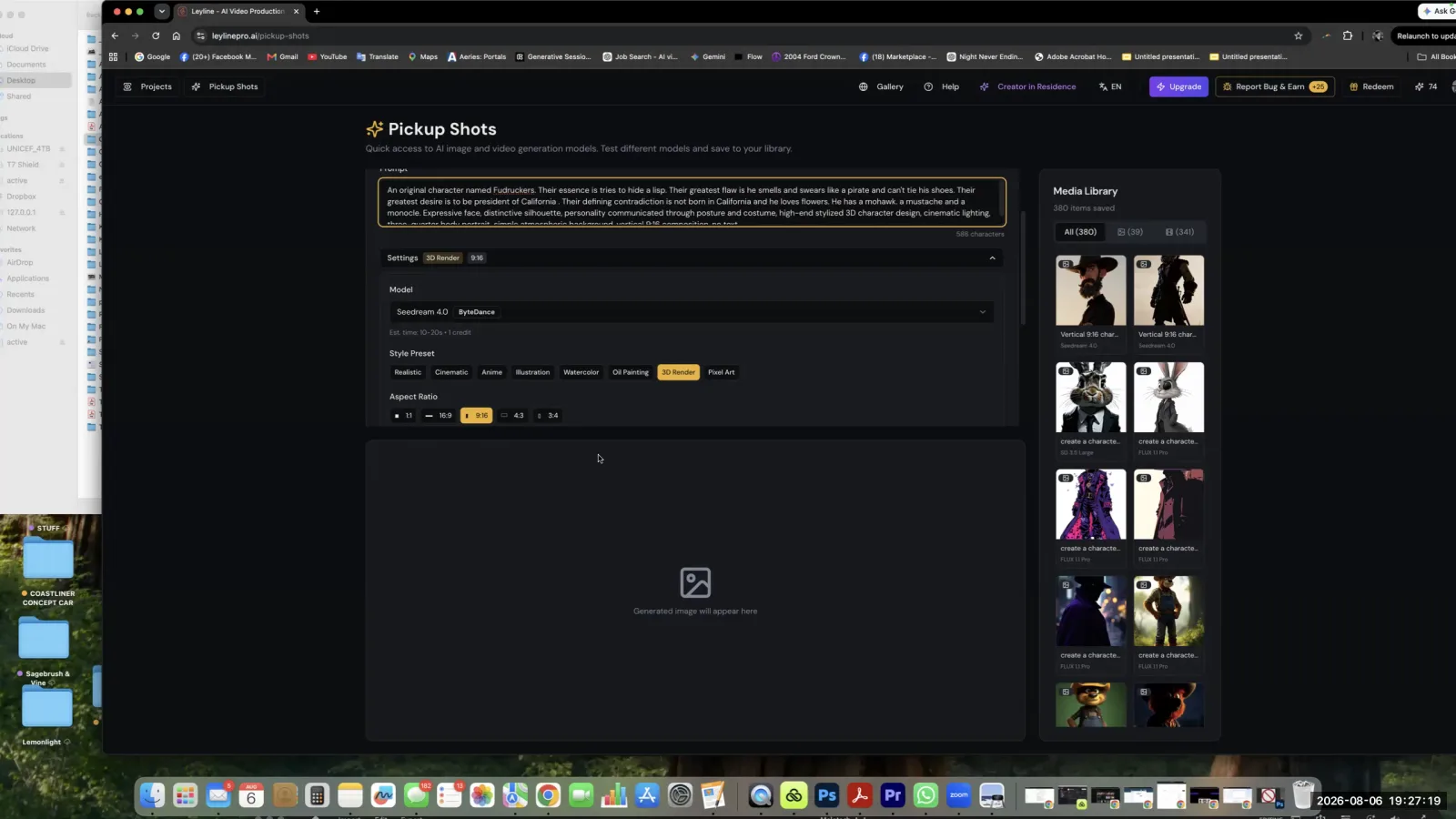
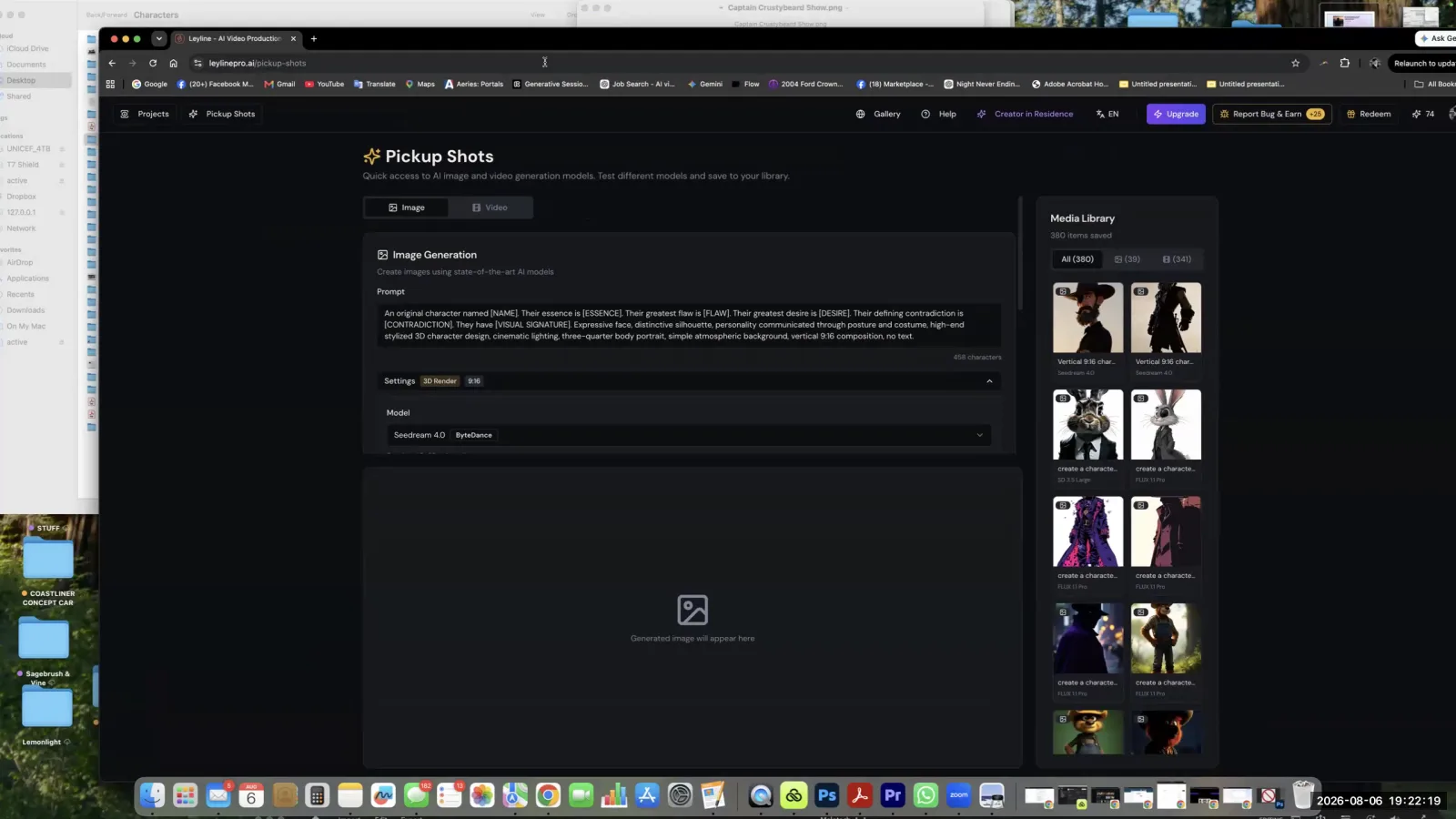
This design philosophy directly addresses concerns from creators like film professor David, who asked about moving beyond broad, descriptive prompts to a more intentional, shot-by-shot workflow. A Leyline developer explained that their tool is built for creators who want to direct. "It is to be able to accommodate any manual overrides and changes in each step as much as possible," they stated. "In each step, you're able to go in and manually fix everything that the AI pre-generated or you're able to manually load everything into it if you choose to do so."
Can an AI-driven breakdown be used for live-action films?
Absolutely. An AI-generated film can serve as a highly detailed, pre-visualized guide for a traditional live-action production. This process validates the story and visual approach, removing much of the guesswork for the script, shot selection, wardrobe, and production design, making the project more appealing to producers and cast.
Marina provided a real-world example of an AI-originated show that became so popular it was first remade as an anime and is now being produced in live-action with an all-star cast. "There's no guessing game with the script when it comes to script and the shots and the wardrobe and, you know, production design," she explained. The AI version acts as a proof-of-concept and a form of IP discovery. When a story is proven successful in the AI space, it gives producers and investors confidence that it has a very good chance to succeed in the live-action market.
Frequently asked questions
What is an AI script breakdown? An AI script breakdown is the use of AI software to analyze a screenplay, automatically identifying elements like characters, props, locations, and scenes. This data is then used to generate production documents like shot lists, schedules, and call sheets, streamlining pre-production.
What software is used for AI script breakdown? While specialized tools are emerging, many filmmakers currently use general-purpose AI like ChatGPT for script analysis. Filmmaker Sandy, for example, uses it with custom prompts to analyze story hooks and structure, instructing the AI to ask questions rather than rewrite her work.
Can AI replace software like Movie Magic? AI has the potential to make traditional script breakdown software obsolete. AI filmmaker Marina notes that legacy tools like Movie Magic are complicated and can turn a breakdown into a 12-hour task. She argues that AI can optimize this process down to one or two hours.
Does using AI for breakdown mean less creative control? No, many new AI filmmaking tools are designed to enhance, not replace, creative control. They allow for manual overrides and step-by-step adjustments to composition, lighting, and other elements, ensuring the director's specific vision is realized in the final output.
Keep learning
This guide is part of the AI Character Creation and the Future of Vertical Dramas masterclass lesson.
Related guides:
Comments
Sign in with your Leyline account to join the conversation.