AI Film Explained: A Creator's Guide to AI Filmmaking
This guide provides an ai film explained from a creator's perspective. AI film is a production method where creators use artificial intelligence tools to generate and assemble cinematic content, often single-handedly or with a small team. This process of ai filmmaking bypasses many traditional resource requirements, allowing individuals to function as their own production studios. It involves using various AI models for tasks like generating visuals, creating character voices, and animating scenes. While it offers advantages in speed and cost, it also presents unique technical hurdles, such as maintaining character consistency and syncing audio, which were previously managed by large, specialized crews.
The Core Concept of AI Film Explained
AI filmmaking empowers individual creators or small crews to become their own production studios. The goal is to replicate the capabilities of a traditional Hollywood studio using AI tools, enabling a single person to manage the entire creative process. AI filmmaker Austin Zartman explains that platforms like Leyline are designed to facilitate this shift, providing the infrastructure for creators to build and monetize their own intellectual properties without needing a large team or budget. "You become their production studio," Zartman states, describing the potential for creators. "Which is one of the reasons we're doing Leyline so that we empower individual creators or small crews to become their own studios. And studios—it's exactly Hollywood but with AI."
This model democratizes content creation by removing the high barrier to entry associated with traditional film. Instead of needing massive funding for equipment, locations, and personnel, an AI filmmaker can generate entire worlds from text prompts. The focus shifts from logistical coordination to creative direction and technical problem-solving within the AI ecosystem. With this method of ai film explained, the creator takes on the roles of writer, director, cinematographer, editor, and visual effects artist, using the ai as their digital crew.
What are the main benefits of making films with AI?
AI filmmaking offers several key advantages over traditional production, primarily centered on cost, speed, and creative control. A core part of having ai film explained is understanding these benefits:
- Lower Cost: It is significantly cheaper than film school or a conventional production budget.
- Faster Production: The path from concept to finished product is accelerated, allowing for rapid iteration and development of intellectual property (IP).
- Guaranteed Completion: Creators can ensure their project gets made without relying on external funding or studio approval.
- Direct Monetization: The efficiency of AI tools opens up immediate avenues for monetization that were previously inaccessible to independent creators.
According to Austin Zartman, "It's cheaper than film school, it's faster than film school and then you're actually going to get it made." This direct path to monetization is a significant benefit when getting ai film explained to new creators. Zartman also points to the commercial potential, mentioning his collaboration with an e-commerce specialist to develop merchandising ideas for the IPs created through this process. This highlights a key benefit: creators not only produce their films but can also immediately begin building a brand and revenue streams around their work, a process that would take years and substantial investment in the traditional industry.
Technical Limitations of AI Film Explained
The biggest technical limitations of current AI tools involve accuracy, consistency, and nuanced performance. Understanding these hurdles is crucial for any creator seeking a complete ai film explained. The main challenges include:
- Inaccuracy and Inconsistency: AI image models are built for creativity, not precision. This causes issues with maintaining consistent character appearances or object placement across scenes. Austin Zartman explains, "It's a limitation of the technology as of today, because it's very good at being creative, but being accurate is not what image models are good at." He mentions that the model used on Leyline is based on 'model banana', and while ChatGPT's image model might be slightly better, they share the same fundamental issue.
- Audio Generation: AI voice generators often struggle with specific requirements, such as producing authentic accents. One creator in Zartman's masterclass shared their experience: "The AI could not figure out how to do an accent," forcing them to record their own voice for a character named Mr. Snaddu.
- Audio-Visual Syncing: Syncing AI-generated voices with on-screen characters is a common point of difficulty. A participant noted trouble syncing an external voice to a clip when it wasn't the voice the AI model generated, pointing to the complexities of integrating audio and video elements smoothly.
How an AI Filmmaker's Role Differs from a Traditional One
An AI filmmaker's role consolidates the responsibilities of a large production crew, often around 200 people, into a single individual. This shift in responsibility is a key part of the ai film explained concept. It means the creator must personally confront and solve every technical problem that arises, from visual glitches to audio sync issues. Austin Zartman frames this as a 'fix it in post' reality, where the creator is now the one responsible for post-production fixes that were once handled by specialized departments in animation or VFX. "All the tech issues you're running into right now is generally going to happen to any professional animation or VFX or professional shows," Zartman says. "It's just somebody else was handling these issues, not you... You're just facing all these issues that were traditionally handled by about 200 people." This shift demands a versatile skill set that combines artistic vision with technical troubleshooting. The AI filmmaker is a director; they are the entire production pipeline, a fact that is central to having ai film explained accurately.
Practical Workflows for Creating AI Film Assets
A practical ai filmmaking workflow involves using different AI tools for their specific strengths and combining the outputs. To overcome consistency issues on one platform, a creator might generate images on another and then import them. This modular approach is a common solution with ai film explained in practice. During a masterclass, a filmmaker named Jen described her process when facing generation challenges on Leyline. She explained, "I do everything chat GPT... I have all my shots that I've looked at my shot list... I do generated in chat GPT and then upload them into Leyline." This hybrid approach allows creators to leverage the slightly better image model of ChatGPT for generating key shots with greater consistency and then use a platform like Leyline for video generation and assembly. This demonstrates a common practice in the field: piecing together a workflow from multiple services to achieve the desired creative outcome, rather than relying on a single, all-in-one solution.
How to Use Keyframes for AI Video Generation
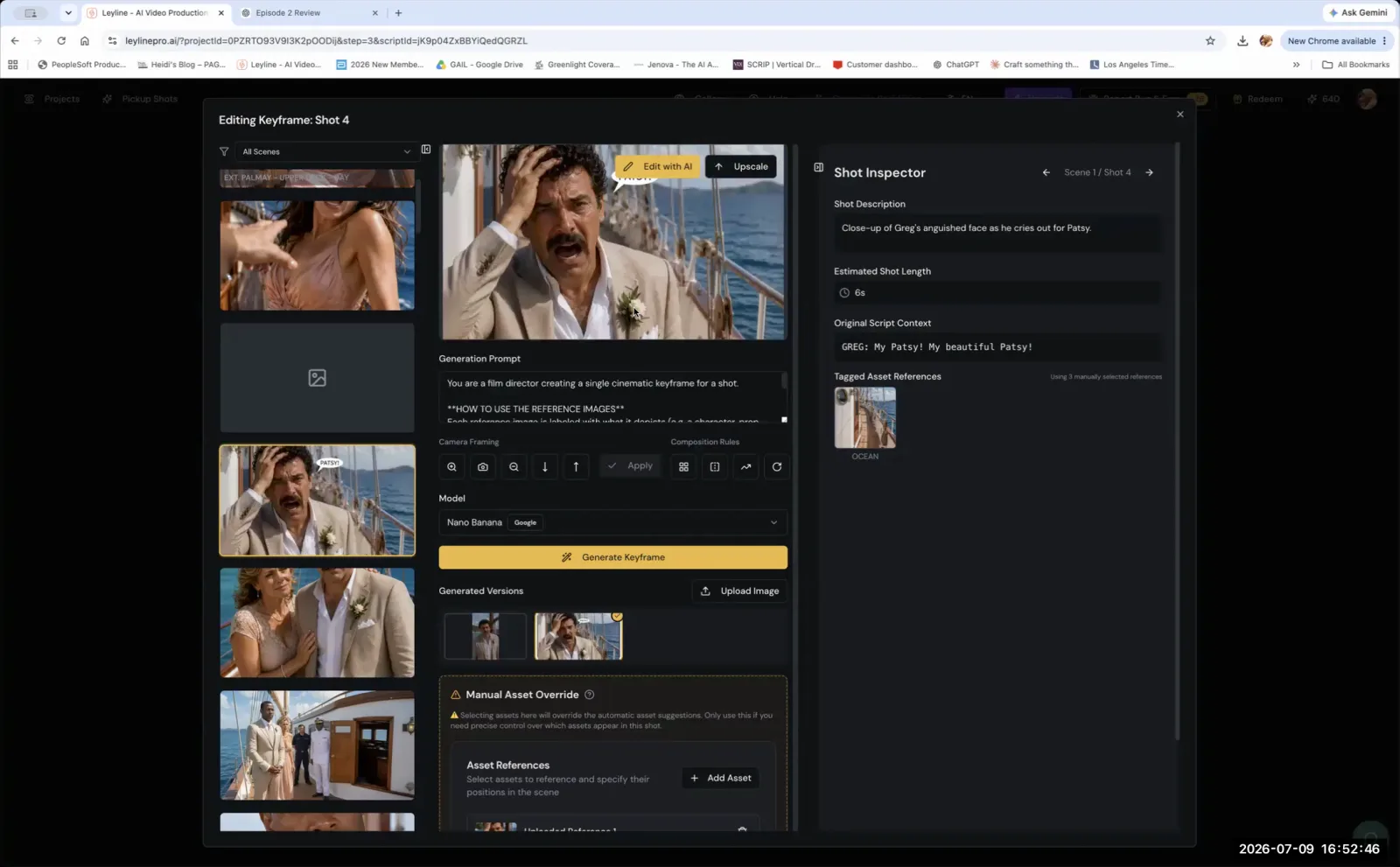
You should use keyframes that clearly imply motion for effective AI video generation. A keyframe serves as a starting point that guides the ai model on the intended action and direction of a scene. This technique is a simple but powerful part of ai film explained for video generation. A static image provides less information, but an image depicting the beginning of a movement gives the AI a stronger narrative to follow. Austin Zartman advises, "When you generate with the keyframe, use keyframes that are implying motion. Like if somebody is like falling, then that is a good beginning key frame because it's it's kind of telling the model where it's going next." This technique helps produce more dynamic and coherent video sequences because the ai has a clearer understanding of the physics and trajectory required for the animation. Choosing an action-oriented keyframe is a crucial step in directing the AI to generate predictable and compelling movement.
Frequently asked questions
What is AI film?
AI film is a production process where creators use artificial intelligence to generate visual and audio assets, enabling individuals to function as their own studios. As explained by AI filmmaker Austin Zartman, it's like "Hollywood but with AI," empowering small crews to create and monetize their own content.
Can AI create voices with specific accents?
Currently, AI voice generation struggles with producing specific accents accurately. In a masterclass, a creator noted that for their character Mr. Snaddu, "the AI could not figure out how to do an accent," forcing them to record the voice themselves to achieve the desired performance.
Are AI image models good at being accurate?
No, current AI image models are designed for creativity rather than accuracy. Austin Zartman states that this is a technological limitation, noting that models are "very good at being creative, but being accurate is not what image models are good at," which can lead to inconsistencies.
Is AI filmmaking less work than traditional filmmaking?
AI filmmaking is not less work; it consolidates the work of many into one person. An AI creator must handle all the technical issues that are traditionally managed by a crew of around 200 people in animation or VFX, from visual glitches to audio syncing.
Why is AI filmmaking considered faster than film school?
AI filmmaking is considered faster because it provides a direct path to producing a finished project. Austin Zartman highlights that with AI tools, "it's faster than film school and then you're actually going to get it made," allowing creators to bypass years of traditional training and production hurdles.
Keep learning
This guide is part of the Troubleshooting and Monetizing Your First AI-Generated Episode masterclass lesson.
Related guides:
Comments
Sign in with your Leyline account to join the conversation.