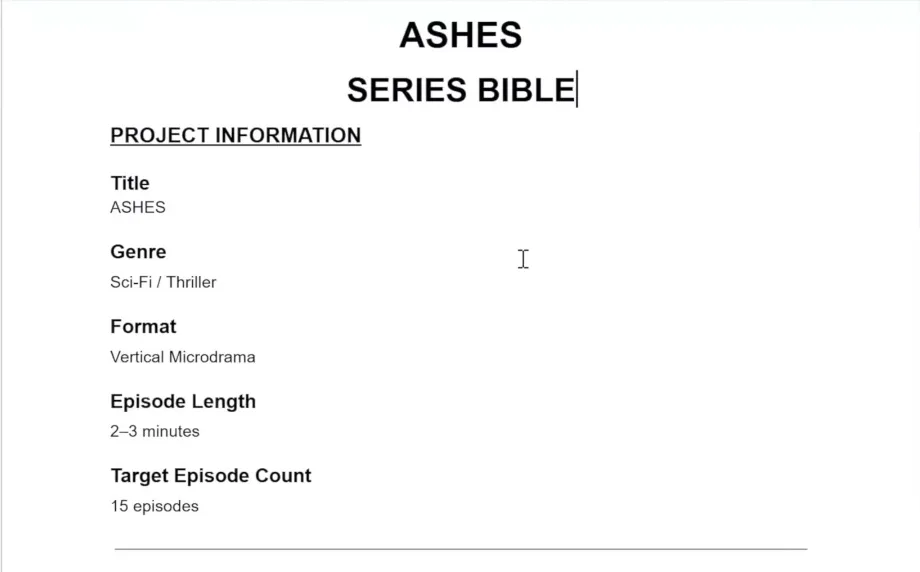
A Series Bible for an AI-generated film is a foundational document. It outlines the narrative, characters, and visual parameters required to maintain consistency across machine-learning image and video generators. If you want to create series bible ai film projects, you need rigid documentation. AI filmmaker Austin Zartman uses this approach. He is the creator of the AI short-film series ASHES on Leyline. An unidentified participant detailed a specific workflow for this process. The framework starts with a log line. It ends with specific visual anchors to control AI outputs. This document serves as the primary reference point before any image generation begins.
What is the primary purpose when you create series bible ai film documents?
The primary purpose of a Series Bible in AI filmmaking is to define the project parameters before generating any media. Every project starts with a series overview to establish a log line. This log line acts as a short pitch to quickly communicate the story.
Having a concise log line allows the creator to state the story rapidly. You can easily share it with others. This short pitch maintains narrative focus. The log line acts as the foundational communication tool when collaborating with other AI artists. It grounds the project in the early stages. The creator defines the series in their own mind before spending credits or time rendering images.
The log line acts as a filter for all subsequent decisions. An AI-generated scene or character concept must serve the short pitch established in the series overview. If it fails to do so, the creator discards it. This prevents a common pitfall. Creators often generate visually impressive but narratively irrelevant content because the AI tool is capable of producing it.
How do you define the main plot to create series bible ai film narratives?
You define the main plot by establishing the A-story and pairing it with specific underlying themes. The A-story drives the narrative forward and dictates the action. The themes represent the core ideas the creator wants to discuss through the series.
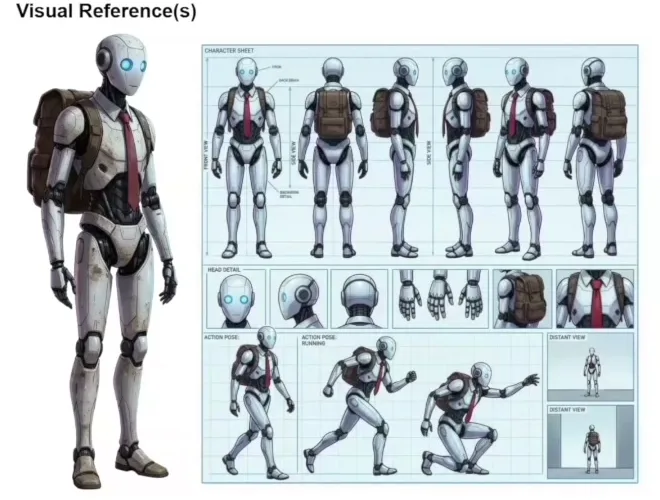
The visual reference section of the ASHES series bible: one locked design per character.
Defining the core of the series requires separating literal events from conceptual themes.
- The A-story: Provides the sequence of events that the AI will visualize. This includes action sequences or dialogue scenes.
- The themes: Dictate the tone and subtext of those visuals.
For example, the A-story might involve a character traveling across a dystopian landscape. The underlying themes might explore isolation or technological dependence. Documenting both ensures the AI prompts reflect the physical action and the emotional weight of the scene. The creator ensures the generated content has narrative depth by defining these elements early in the Series Bible. This supports the visual execution rather than relying on the novelty of AI generation.
Why is the story world crucial to create series bible ai film environments?
The story world is crucial for AI-generated content because it provides the necessary visual boundaries that keep AI image generators from producing generic environments. The visual aspect is critical for catching viewer attention.
The setting often requires as much prompt engineering as the characters in the AI filmmaking process. Documenting the specific rules, aesthetics, and physical laws of the story world gives the creator a blueprint. This blueprint guides the generation of backgrounds and establishing shots. The visual aspect of the series needs to grab the viewer immediately.
AI tools can generate heavily stylized imagery on demand. Therefore, the story world documentation must act as a strict filter. It dictates which visual elements belong in the universe and which must be excluded. Creators avoid generating disjointed environments that break narrative immersion by locking down the story world details before production.
How should characters be broken down to create series bible ai film assets?
Characters must be broken down by their specific visual details, goals, and the main conflict standing in their way. Platforms like Leyline allow creators to generate images for each character. Providing exact visual descriptions ensures the characters stand out and remain consistent.
Knowing where a character's journey ends is a mandatory step. You must know who they are and exactly what they look like. Being specific with physical descriptions translates directly into more accurate text prompts for the AI. Detailing what the character wants and what stands in their way informs the character's expressions and posture in the generated images.
Creators must also generate visual references. The recommended approach is creating a clear hero shot.
- Place the character on a blank background.
- Isolate the character from any environmental variables.
- Allow the AI model to analyze the character's features without interference.
Image generation models use these blank background references efficiently. The creator uses the hero shot as an image prompt. This maintains facial and clothing consistency when placing the character into the complex story world environments defined earlier in the bible.
How do you structure the narrative arc to create series bible ai film episodes?
You structure the narrative arc by defining the opening image, mapping out the major story beats, and establishing the ending hook of each episode. This sequential process breaks down the series to maintain viewer engagement across multiple installments.
Mapping the actual arc of the series requires identifying specific visual milestones. This follows a workflow referred to as Zao's process.
- Opening image: Serves as the viewer's introduction to the AI-generated world and sets the immediate tone.
- Major beats: Dictate the necessary scene generations required to move the A-story forward.
- Ending hook: Ensures the narrative builds anticipation at the end of each episode.
This beat-by-beat breakdown ensures the AI generation process follows a logical progression. Knowing the exact opening image and the final hook for each episode prevents the creator from generating unnecessary footage. This saves rendering time and computing resources.
How do you establish a consistent visual style to create series bible ai film aesthetics?
You establish a consistent visual style by selecting specific, existing media properties as visual references before generating any images. An image generator prompted for an animated robot might produce conflicting styles ranging from Pixar to 90s Disney or a 2.5D Arcane look without clear direction.
The final choice a creator makes before initiating image generation is deciding exactly what the series looks like. Entering a basic prompt like "animated robot" into an image generator is insufficient. The AI requires a defined visual target.
For an animated sci-fi series, a creator might use Akira, Mobile Suit Gundam, and Ghost in the Shell as anchors. Keeping these specific references in mind ensures all generated images fall within a controlled, recognizable visual framework.
An AI model defaults to its training data averages when left to interpret a generic prompt. This results in inconsistent aesthetics. Explicitly referencing established visual styles like Mobile Suit Gundam or Ghost in the Shell provides the AI with a strict visual vocabulary. This anchor guarantees the output remains stylistically cohesive throughout the entire production process. This applies whether the AI is generating a wide establishing shot or an intimate character close-up.
Frequently asked questions
What is a hero shot when you create series bible ai film characters?
A hero shot is a clear, full-body or portrait image of a character placed on a blank background. Image generation models use these specific reference images to easily maintain character consistency and insert the subject into various generated scenes and environments.
Why is an episode ending hook necessary?
An episode ending hook is necessary to maintain audience retention between episodes. By defining the ending hook for each episode in the series bible, creators ensure the narrative arc builds anticipation. This drives viewers to watch the next installment of the AI-generated series.
How do visual references control AI image outputs?
Visual references control AI outputs by providing a specific stylistic anchor, preventing the model from defaulting to random aesthetics. Citing specific anime like Ghost in the Shell or Akira forces the image generator to align its output with that exact visual framework.
What is the A-story when you create series bible ai film narratives?
The A-story is the primary plot that drives the narrative forward. In a series bible, it is defined alongside the underlying themes to ensure the AI-generated film balances forward momentum with the core ideas the creator wants to discuss.
Comments
Sign in with your Leyline account to join the conversation.