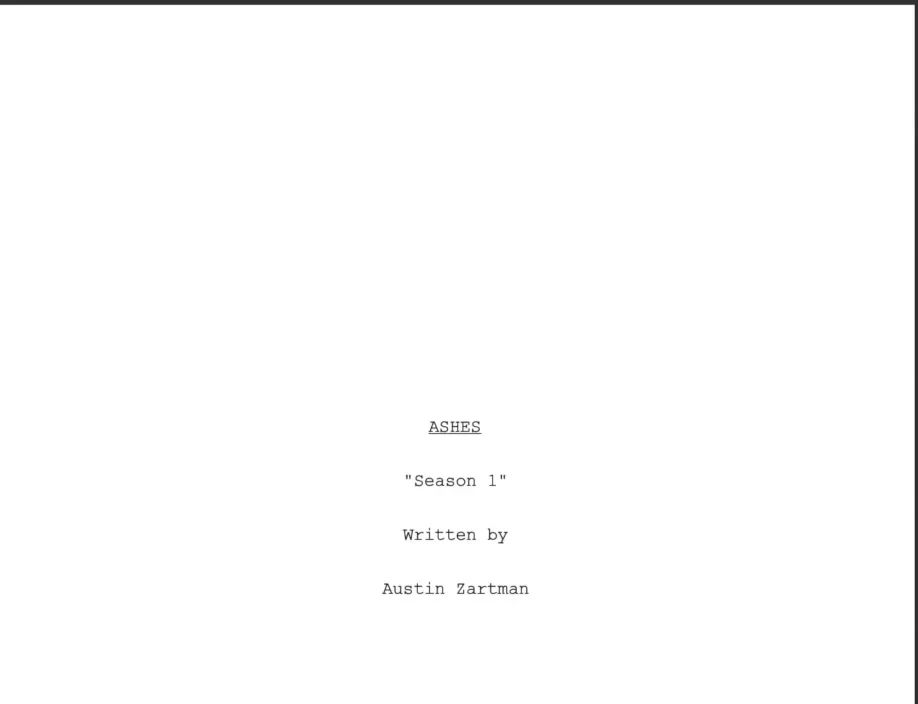
Determining the correct ai short film script page count relies on traditional screenwriting metrics rather than new formulas. Austin Zartman, an AI filmmaker and creator of the AI short-film series Ashes on Leyline, applies standard industry formatting to calculate runtime and structure narrative pacing. By utilizing established screenplay conventions, creators can accurately predict the final duration of their AI-generated projects. Managing the script length helps control individual scenes and identify structural breaks for episodic content.
How to calculate your ai short film script page count
An ai short film script page count should equal exactly one page for every minute of intended screen time. This metric relies on standard industry screenplay formatting, dictating that a single formatted page translates to sixty seconds of finished video. This provides a reliable baseline for production.
Austin Zartman states that the primary benefit of using traditional screenplay format for AI filmmaking is this established industry convention. When a creator wants to produce a five-minute AI short film, the script should be five pages long. If the target is a ten-minute film, the script requires ten pages.
This one-to-one ratio provides a concrete measurement for planning the scope of an AI video project before generation begins. Relying on this standard prevents creators from over-writing or under-writing their narratives. AI video generation requires significant computational resources. Knowing the exact target duration through the page count helps manage the workload.
To maintain an accurate ai short film script page count, filmmakers must use standard formatting rules:
- Use standard margins for the page.
- Format distinct dialogue blocks.
- Include clear action lines.
- Balance white space on the page.
Accuracy of the page-to-minute ratio
The one-page-per-minute rule remains accurate for AI-generated films, typically resulting in a final runtime that closely mirrors the ai short film script page count. In practical application, the final video duration may extend slightly beyond the exact page count, but it holds as a reliable estimate.
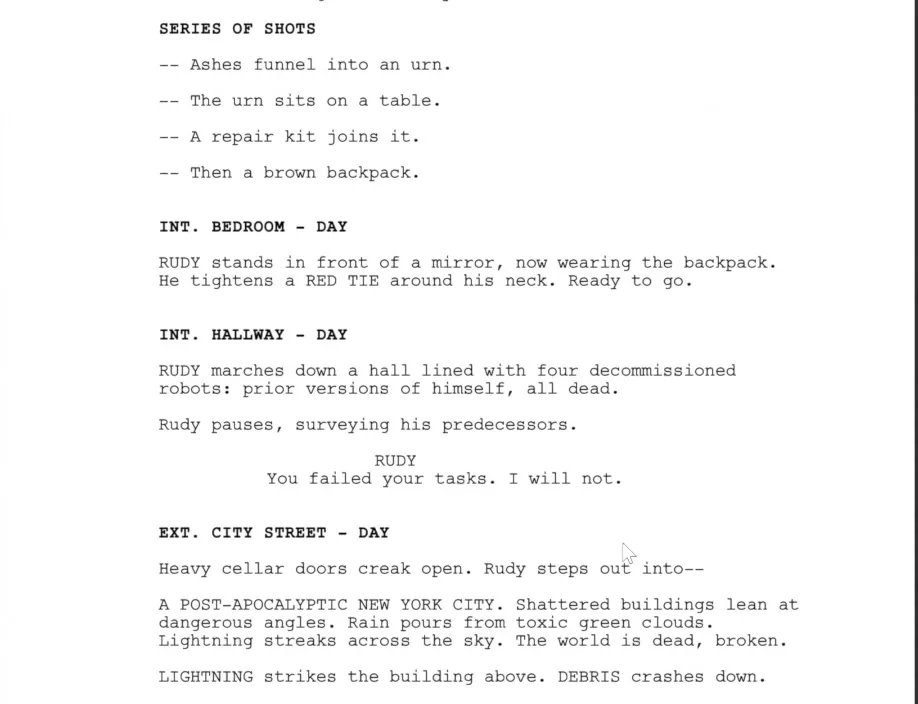
A page of the ASHES script. In standard format, one page runs about one minute on screen.
Zartman provides a concrete example from his own production process. For his AI short-film series Ashes, the complete script was 31 pages long. The final total runtime for the finished series was 34 minutes. This results in a ratio of approximately 1.09 minutes of screen time per script page.
Zartman notes that the industry standard held well for this project. This proves that traditional formatting translates effectively to AI production workflows.
This three-minute variance across a 31-page script demonstrates that while AI pacing might require slight adjustments in the edit, the foundational estimate remains intact. Creators can confidently use their page count to forecast the total duration of their film. A 31-page script will consistently land near the 31-minute mark. This prevents unexpected runtime inflation during the rendering phase.
Managing scene length using your ai short film script page count
A single scene in an AI short film should generally stay under three pages to maintain narrative pacing. When a scene reaches three and a half pages, it indicates that the script is spending too much time on one specific location or interaction.
Monitoring the page count of individual scenes acts as a built-in pacing mechanism. Zartman uses the screenplay format to evaluate scene density. He notes that when writing, the page count signals when a scene has overstayed its welcome. He observes that a scene running three and a half pages serves as a warning that he is spending too much time on that specific narrative beat.
In the context of the one-page-per-minute rule, a three-and-a-half-page scene translates to three and a half minutes of continuous screen time in a single location. For short films, dedicating this much time to a scene can disrupt the overall pacing and inflate the total script length.
Filmmakers can fix a long scene by taking specific actions:
- Condense dialogue blocks.
- Edit and shorten action lines.
- Transition to a new location sooner.
Why traditional formatting dictates the ai short film script page count
Traditional screenplay format provides the most helpful and accurate method for estimating the final runtime of an AI-generated episode. Formatting text with standard margins, dialogue blocks, and action lines ensures the page-to-minute ratio functions correctly for production planning.
Writing an AI short in a standard word processor without screenplay formatting eliminates the ability to gauge screen time. A page of dense, margin-to-margin text will take much longer than one minute to unfold on screen. Zartman emphasizes that the screenplay format itself makes the estimation possible. He finds that this specific layout is the most helpful tool for getting a good estimate of how long an episode is going to be.
By adopting this format, AI filmmakers inherit a tested measurement tool. The physical layout of the text on the page balances white space, action lines, and dialogue to create the pacing necessary to hit the one-minute-per-page target. This allows creators to plan their generation pipeline based on a highly accurate estimate of the episode's final length.
Using the ai short film script page count for episode breaks
Tracking page counts within a formatted script allows creators to identify natural narrative breaks, dictating where one episode ends and the next begins. This structural mapping ensures episodes maintain consistent lengths across an AI series by aligning breaks with specific page numbers.
Another creator, Zach, highlights that writing in the script format is exactly where a filmmaker can find the episode break. Because the page count directly correlates to minutes, a creator planning a series of five-minute episodes can look specifically at page five, page ten, and page fifteen. These specific pages help locate or engineer narrative cliffhangers and transitions.
This method integrates runtime planning directly into the writing process. Instead of generating video and arbitrarily cutting it into episodes later, the creator builds the episode breaks into the script based on the page count. If a natural break occurs on page six, the creator knows that specific episode will run for approximately six minutes. This allows for precise structural control over the entire AI series.
How the ai short film script page count impacts production planning
Knowing the exact ai short film script page count allows AI filmmakers to calculate the scope of their production and manage the time required for video generation. A specific ai short film script page count provides a definitive boundary for the project's scale, preventing scope creep during generation.
When Zartman wrote the 31-page script for Ashes, that page count established the total volume of video generation required. Because one page equals one minute, a 31-page script means the creator must generate, review, and edit approximately 34 minutes of final footage. This direct correlation between page count and screen time prevents the project from expanding uncontrollably during the AI generation phase.
Without a strictly formatted script to dictate length, AI filmmakers risk generating excess footage that will ultimately be cut. This wastes computational resources and time. By locking the script at a specific page count, the creator defines the exact number of minutes needed. The script format serves as a blueprint, ensuring that the production effort remains focused strictly on the pages written.
Frequently asked questions
What is a good ai short film script page count?
A good ai short film script page count depends entirely on your target runtime. If you want a five-minute short, aim for exactly five formatted pages.
How many pages was the script for the AI series Ashes?
The script for the entire AI series Ashes was thirty-one pages long. This thirty-one-page script resulted in a final total runtime of thirty-four minutes. This demonstrates the accuracy of the one-page-per-minute industry standard when applied to AI video generation pipelines.
How long is one page of a screenplay in screen time?
One page of a properly formatted screenplay equals one minute of screen time. This is an established industry convention that applies directly to estimating the runtime of AI-generated short films and series. It provides creators with a reliable metric for production.
How do you know if a scene is too long in an AI script?
A scene is likely too long if it reaches three and a half pages. Austin Zartman notes that a scene running three and a half pages indicates the writer is spending too much time on that specific narrative beat, disrupting the overall pacing.
How do you find episode breaks in an AI series?
Episode breaks are found by utilizing standard script formatting. Because the format translates pages to minutes, creators can review the page count to locate natural structural breaks that align with their target episode duration. This ensures consistent episode lengths across a series.
Comments
Sign in with your Leyline account to join the conversation.